In the 1970s, feminists launched a linguistic revolution that eventually reshaped church language. Rejecting grammarians’ androcentric decree that generically masculine nouns could be used to convey multigender groups, these feminists argued that as long as women were not explicitly named, they would continue to be an afterthought to men, if they were remembered at all. Thus they pushed for words like “chairman” to become “chairperson,” for “mankind” to shift to “humankind,” and for a non-specified “he” to be replaced with “he or she.”
Within the church, this movement gradually reshaped biblical and liturgical language. In the proceeding decades, more and more new English Bible translations rendered the Greek word adelphoi as “brothers and sisters” instead of “brothers” alone in verses where a mixed-gender audience is contextually evident. By the time I was a kid attending church in the early 2000s, this once strongly debated change was simply taken for granted. Of course we say “brothers and sisters”! In our present day, it would sound deliberately exclusionary to leave out “sisters.”1
Language is both shaped by and shapes our understanding of the world, ourselves, and the divine. Language matters. It is therefore important that we regularly review what messages our words are sending:
- Whom are we leaving out, often without even realizing?
- How are we reinforcing or subverting mainstream narratives about which bodies, minds, and relationship structures matter “less”?
- Most importantly, how do we incorporate explicit messages of belonging for those historically excluded?
After we recognize where various elements of our worship fail, we can then take steps to uproot the harm and pull the margins to the center.
The rest of this article explores this process with examples specific to the disability and trans communities, as much of church language is particularly damaging to—but can be renovated to heal and uplift—these two groups.
1. Removing Messages That Harm
Several decades ago, expanding “brothers” to “brothers and sisters” was revolutionary, reflecting a feminist aim to make women’s equality with men linguistically apparent. Now the trans community calls us into the next step of the linguistic revolution: intentionally naming our nonbinary siblings who don’t fit into the binary categories of either “brother” or “sister.”
Meanwhile, the disability community has long been fighting for the discontinuation of certain words. Outside church, most of us understand that “crippled” and “lame” are not terms we should be using for a person with a disability. Yet we continue to sing hymns and read Bible translations that use those slurs as if they are neutral terms!
To some, the call to shift our language may seem trivial. Maybe we’re just pedantic or too sensitive. But the God we worship spoke the entire cosmos into being. Words are always more than just words; they reflect and reinforce our worldview.
When the liturgist greets worshipers as “brothers and sisters,” I am forcibly reminded that churches simply don’t expect a nonbinary person like me to exist in their midst. When we are instructed to “please stand,” people with mobility disabilities receive an implicit message that worship was not designed for them, let alone by anyone like them. In both cases, word choice says something about who is and isn’t an intrinsic part of the community.
Erasure is not the only issue; our language can also perpetuate harmful narratives. For instance, hymns that promise that “the blind will see” and “the lame will walk” in heaven reify societal assumptions that disabled people are broken or incomplete, as well as spiritual assumptions that disability is at odds with membership in God’s “Kin-dom.” Amos Yong explains the dangers of this messaging: “Eschatological images without people with disabilities effectively translate into churches—harbingers of the coming reign of God—without such people, either. [. . .] If disabilities are to be purged in the afterlife, then why shouldn’t that purging process begin in this one?” (“The Bible, Disability, and the Church: A New Vision of the People of God” [Eerdmans, 2011]) If we can’t imagine the possibility of disability in the world to come, we are less likely to prioritize the full inclusion and belonging of disabled persons here and now, as they are, and not as what we think they “should” be.
Below is a table that can get your community started on switching out terms that perpetuate harm for disabled persons.
Rethinking Ableist Vocabulary
| Term | Why It's Harmful |
|---|---|
| differently abled | While this phrase’s intent is to focus on an individual’s abilities rather than their impairments, its impact is to give abled persons a euphemism that lets them avoid the “discomfort” of acknowledging real problems that disabled persons face: “‘Differently abled’ ignores the reality that disability is the result of a complicated interaction between individual people's bodies/minds and social, cultural, and political structures that actively work to disable people with atypical bodies/minds” (from "How 'Differently Abled' Marginalizes Disabled People" by Ly Xinzhen Zhangsun Brown, Autistic Hoya [Aug. 29, 2013], https://www.autistichoya.com/2013/08/differently-abled.html). |
| physically challenged, mentally challenged | Another euphemism, this term allows abled persons to perceive disability as an “individual issue,” rather than in large part resulting from societal failures to cultivate full access and belonging for all. |
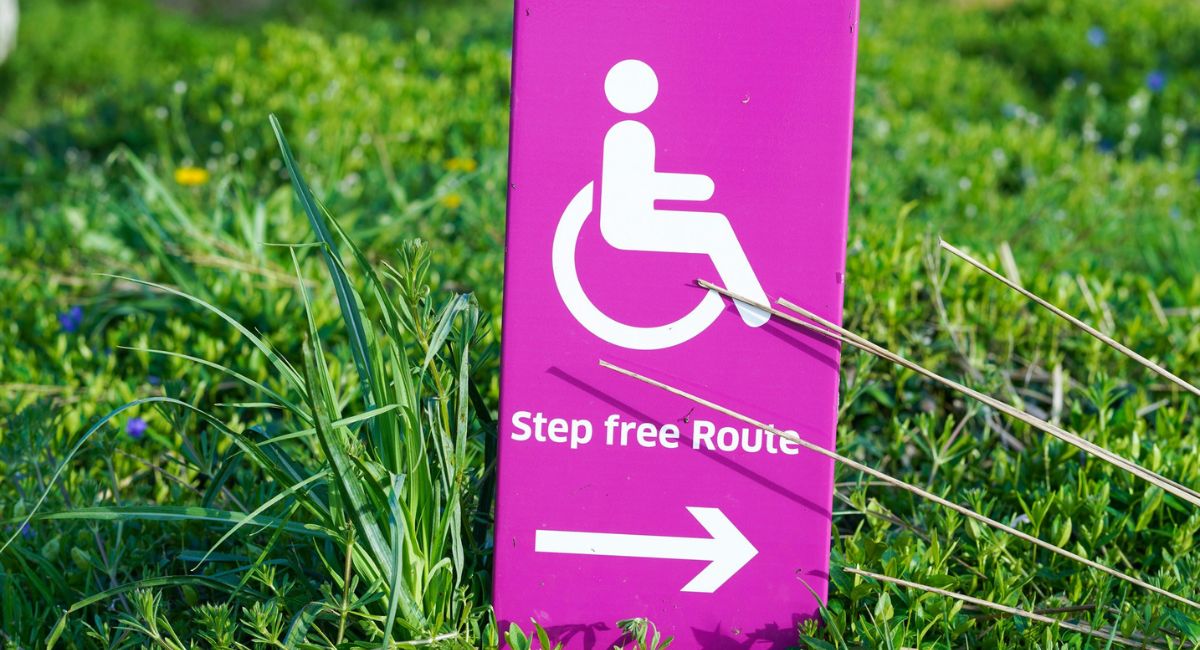
| handicapped | This is an outdated term that also situates the "problem" of disability solely with the individual. Refer to bathrooms, parking spaces, entrances, seating, and other things equipped for disabled persons as “accessible” rather than “handicapped”: e.g., “Our church has three accessible parking spaces next to the front entrance, which has a ramp.” |
| wheelchair-bound, confined to a wheelchair | These imply that a wheelchair restricts its user. Many wheelchair users experience their chair as incredibly freeing, enabling them to access more spaces and/or avoid pain or exhaustion. You can simply say “uses a wheelchair” instead. |
2. Biblical Talkback
Why are our hymns and liturgy laden with language that devalues or excludes certain groups? One big reason is that the biblical texts we draw on for our worship materials contain—or, in some cases, can be misinterpreted as containing—those messages, too. Recognizing and reforming where our worship falls short of full inclusion and justice requires honesty about where biblical texts reflect the bias of their human authors.
For example, scripture may complicate following Amy Kenny’s suggestion to alter a line from “Amazing Grace” from “was blind, but now I see” to “was bound, but now I’m free” (“My Body Is Not a Prayer Request: Disability Justice and the Church” [Brazos, 2022]).2 Kenny’s aim is to remove the connection between blindness and spiritual ignorance—so what do we do when one of the lectionary readings contains that same metaphor of spiritual blindness, as at the close of John’s story of Jesus making a blind man sighted (9:39–41)?
There’s no one right answer, but possibilities abound if we engage scripture as a living text, an ongoing conversation.
The Word of God who is Christ and the breath of God who is the Spirit don’t only speak and move in scripture, but in us, too. We can talk back to the text, naming bluntly the parts that fail to fully convey God’s liberation—even while still taking it seriously, still wrestling blessings from every page.
We can also listen for where the Bible’s various authors talk back among themselves. As a compilation of texts recorded by different people in different contexts, scripture often contains multiple perspectives on the same topic. When the lectionary provides a passage with potentially harmful implications for any given group, liturgists and preachers may choose to place it in conversation with a passage where God’s good news for that group shines through.
For example, in the lessons for Year A’s Third Sunday of Advent in the Revised Common Lectionary, we read:
“Then will the eyes of the blind be opened
and the ears of the deaf unstopped.
Then will the lame leap like a deer,
and the mute tongue shout for joy.” (Isaiah 35:5–6, Common English Bible)
The implication of this passage is that God’s reign necessarily involves the removal of physical disability, even for persons who find identity and community in their differences (capital-D Deaf persons in particular often experience their deafness not as disability but as a valued difference, speaking not of “hearing loss” but “deaf gain”).
Compare that vision of disabilities removed to a different biblical text, wherein God proclaims:
“I’m going to bring them back from the north;
I will gather them from the ends of the earth.
Among them will be [blind and disabled persons],
expectant mothers and those in labor;
a great throng will return here.
With tears of joy they will come;
while they pray, I will bring them back.
I will lead them by quiet streams
and on smooth paths so they don’t stumble.” (Jer 31:8–9a, CEB)
While Isaiah presumes that disabled bodies must change, Jeremiah sings of a world transformed with paths made accessible so that all may journey safely. This vision better reflects the social model of disability, which focuses on dismantling ableist attitudes and increasing access and accommodation rather than attempting to “fix” any disabled individual.3
3. Incorporating Messages of Full Belonging
Removing language that erases or degradates marginalized groups creates a void that most worshipers will subconsciously fill in with the same old societal norms and presumptions. It is up to worship leaders to proactively and intentionally fill that void with new messages of equity, belonging, and even celebration. Leaders need to guide communities through transformation brought about by the continuous renewal of our minds, to paraphrase Romans 12:2.
This transformation is indeed continuous, an ongoing journey rather than a one-and-done assignment. There will always be new ways to draw our circles wider—and it can be fun! A commitment to incorporating life-giving messages into worship can empower your whole community to share ideas and stories.
Here are some areas to explore as you get creative about reshaping the messages conveyed in worship.
Address Worshipers with More Inclusive Language
- Postures and movements: Instead of “please stand,” invite those gathered to “please stand as you are able” or “please rise in body or spirit”
- Addressing people of all genders: Instead of “brothers and sisters,” shorten to “siblings” or expand to “brothers, sisters, and nonbinary siblings”
- Non-gendered language for people: Get creative with non-gendered ways to address worshipers, such as “beloved community,” “kin in Christ,” and “children of God”
Expand Language Used for God
- Using and omitting pronouns for God: In order to showcase how God exists beyond human constructions of gender, you may choose to avoid all pronouns for the divine. Alternatively, you might change up which pronouns you use (e.g. he, she, they) in order to showcase how God encompasses all genders and how people of all genders are made in God’s image.
- Feminine and non-gendered images of God: Incorporate the variety of feminine and non-gendered imagery that the Bible uses for God, like:
- God as brooding bird (Gen 1:2), mother hen (Lk 13:34), or mother bear (Hos 13:8)
- God in labor (Isa 42:14), as midwife (Isa 66:9), and loving or nursing mother/parent (Isa 66:10–13, Hos 11:4)
- God as a still small voice or thin silence (1 Kgs 19:12–13)
- God as rock and refuge (Ps 18:2 and 62:6–7)
- More names for God: Involve the whole community by inviting an intergenerational Sunday School class to come up with meaningful names for God together. Some examples are:
- Mother/Parent God, Great Liberator, Living Word, Limitless Love, God of Justice/the Oppressed, Divine Protector, Mischievous Spirit, Spirit of Truth
- “God the Gatherer, God the Grafter, God the Weaver of our many threads into a colorful whole . . .” (Arden, “Call to Worship and Opening Prayer: Draw the Circle Wide; God Gathers Us in Our Diversity,” Binary-Breaking Worship [Oct. 2, 2020])
Explicitly Name Disabled, Queer, and Otherwise Oppressed Persons
For those whom our culture erases, out of sight is all too often out of mind, so intentionally focus minds on these groups in preaching and praying! Be sure to bring up not only struggles these groups face, but joys and gifts too. Here are some examples for liturgy:
- Inviting diverse ways of being: In the call to worship or opening prayer, invite worshipers in their diversity of ways of being, moving, and loving into a unity that does not require uniformity
- Confessing shortcomings in solidarity and kinship: In the confessional prayer, name specific ways that we (as church, as nation, or humanity in general) have fallen short of solidarity and kinship with various groups. Here’s an example: “When we refuse to recognize the unique ways our transgender siblings participate in co-creation and manifest the Divine Image of a God far vaster than any rules we devise or boxes we build, forgive and transform us, Creator God. Open us to choose respect over rejection, conversation over misinformation, relationship over alienation.” (Arden, “Confession of Anti-Trans Violence & Assurance of God’s Grace,” Binary-Breaking Worship [Jul. 1, 2024])
- Praying for vulnerable people: In intercessional prayers, bring up systemic injustices or current events impacting the most vulnerable. For example: “For those who feel cut off and discarded by societies that shove people aside when age, illness, or disability keeps them from fulfilling impossible standards of productivity, we pray for loved ones that honor their inherent worth, and for more just laws to protect them from abuse and neglect and enable their full participation in our communities.” (Arden, “Acts 8 & John 15 Liturgy: Eunuchs, Intersex & Trans Persons, & All Outcasts Welcome in God’s Expansive Love“)
Incorporate Positive Representation and Resonances in Scripture
- Reading affirming and resonant scripture stories: From immigrants and disabled persons to unhoused persons and gender outcasts, the Bible is brimming with figures with whom oppressed persons may identify. Not all examples are positive ones, particularly when it comes to how disabilities are presented, but many are! Incorporate these figures’ stories into the Proclamation of the Word or scripture lessons.
- For example, when you preach on Moses, name him as a disabled hero: Moses protests that he cannot be God’s spokesperson due to a speech difference (“I am slow of mouth and tongue” [Ex 4:10b]). God responds by proclaiming that They are the source of various disabilities, implying that bodily diversity is a natural, neutral occurrence (Ex 4:11). God then accommodates Moses’s stated needs by assigning Aaron to serve as Moses’s spokesperson.
- For parts of scripture that resonate strongly with many queer and trans people, visit “Trans Timeline,” Blessed Are the Binary Breakers
- Noticing scriptures’ gaps and imagining possibilities: Look for the gaps in biblical narratives that we might prayerfully fill in using our “sanctified imaginations.” Who or what is missing? Who or what goes undetailed? As Janet Lees ponders in “Enabling the Body,” “The twelve named male disciples are usually presented as a robust gang of young adults, called away from earning their various livings. What impairments did they live with? Fishing was a dangerous occupation then as it is now. How many fingers did Peter have? Living in occupied territory was a dangerous business then as now. How many scars did Andrew have? Leaving your job was risky then as now. How much stress did Matthew or Thomas have? . . . We each have faith and imagination. If we could use that imagination to inform faith, how might discipleship challenge all of us again?” (In “This Abled Body: Rethinking Disabilities in Biblical Studies,” eds. Hector Avalos, Sarah J. Melcher, and Jeremy Schipper [Society of Biblical Literature, 2007])
- Intersections with Jesus’s story: Explore where elements of the divine and/or the life of Jesus resonate with experiences of marginalized groups today. For example, in “The Disabled God: Toward a Liberatory Theology of Disability” (Abingdon, 1994), Nancy Eiesland declares that the risen Christ is disabled—that God chose to rise with resurrection wounds that would have impaired movement and fine motor skills, thus proving once and for all that disability is not incompatible with holiness or necessarily absent from God’s Kin-dom.4
Commitment to the Journey
This article has offered myriad ways to guide your worshiping community further into fullness of belonging for all people. If you’re feeling overwhelmed, keep this in mind: There is no checklist of all the things a community has to do or that needs to be completed all at once. Cultivating full belonging for trans, disabled, and other marginalized persons is an ongoing process. What matters is not some unobtainable perfection, but a commitment to the journey.
Earlier I named the alienation I experience when worship language “forgets” that I as a nonbinary person exist. Let me describe now how my experience is transformed when the opposite occurs.
If I enter a church and am offered a nametag with space for pronouns, or the opening announcements welcome brothers, sisters, and nonbinary siblings, or a hymn’s binary language has been altered, my whole body relaxes and my heart lifts. I can lower my defenses enough to partake fully in this communal celebration of the God who made us all and called us good.
As Fiona MacMillan explains in “Fiona’s Story” in the book “Disability: The Inclusive Church Resource” (ed. John M. Hull, [Darton, Longman & Todd, 2014]), “Painful things are less painful in a church which is trying to know better so that it can do better; which is listening, open, more aware. There is hope of change at the heart, and I am drawn in; signs of acceptance if not yet of understanding, while the work of inclusion promises something of and beyond belonging.” Even if and when a community messes up, evincing a commitment to make things right and do better in the future makes all the difference. Take it one step at a time, and together we will live ever deeper into God’s Kin-dom, where the last are first and all gifts and voices are cherished.
Notes
1. For more on feminine language for God and its importance, see Lynn Japinga’s “Language about God” in “Feminism and Christianity: An Essential Guide” (Abingdon, 1999).
2. Another example Kenny offers for “redeeming” rather than “canceling” a beloved worship song is altering “Forever Reign” by Hillsong so that “when my fear is crippling” becomes “when my fear is threatening” and “I’m running to your arms” becomes “I’m rushing to your arms.”
3. Visit this webpage for an introduction to various models of disability, from the medical to the social to the political: “Disability Basics,” Blessed Are the Binary-Breakers.
4. Nancy Eiesland’s 1994 book “The Disabled God” is foundational to disability theology, exploring connections between divinity and disability.
Leave a Reply