
When I (Catherine Breed) started working in youth ministry back in 2000, it seemed pretty easy to come up with things that would appeal to teens. At the Episcopal church where I worked in Virginia Beach, we hosted weekly youth group gatherings, Bible studies, and small groups, as well as Mario Kart and ping pong tournaments, cookouts, and lots of ice cream outings.
After working mostly in children’s ministry and classroom elementary religious education since 2006, I recently joined a Family Ministries team that includes ministry to both children and youth. I wondered how different it would be to try to rebuild a ministry now with middle and high schoolers from “the anxious generation” who have lived through a global pandemic and are accustomed to nonstop entertainment.
Responding to Youth Needs in Our Current Context
A recent study by the Fuller Youth Institute says that “teens hang out with each other less in person than in prior generations” (“The FYI Report on Gen Alpha & Faith, Part 1: Insights on an Emerging Generation” [Fuller Theological Seminary, 2026]). The young people in the Ivy League university town where I now live (Princeton, New Jersey) have super busy lives filled with all sorts of pressure and very little free time that is not filled with screens. Some of the youth in our church attend Sunday services with their families, but I wondered if they would be up for anything more than that.
Donte Milligan, the Minister of Youth at Trinity Church, was eager to try a weekend retreat. Anne Thomsen Lord, our Director of Family Ministries, loved the idea of getting kids away from the pressures of daily life and into a place filled with nature and beauty. I must admit that, although I love retreats, I was skeptical that we could pull it off in our church or that anyone would sign up. I was happy to find that I was wrong!
The Shape of Our Retreat
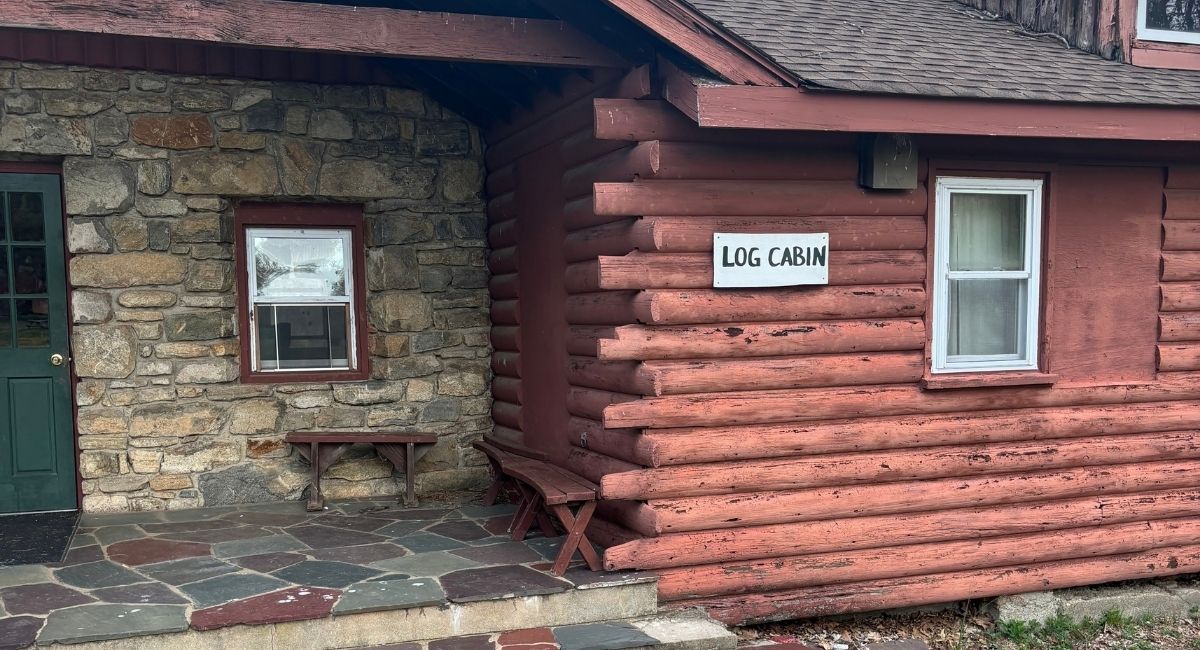
We packed a passenger van and drove to Cross Roads Camp and Retreat Center, a community built in partnership between the Episcopal Diocese of Newark and the New Jersey Synod of the ELCA. Cross Roads rests in the woods of the New Jersey highlands. Thankfully, during our stay, the weather was as beautiful as the setting!
Meals were served and eaten in Cross Roads’ rustic dining hall. Their team led us in playful blessing songs like “Thank you, Lord, for giving us food” to the tune of the Superman theme song. It was fun to see the kids laugh and loosen up as they were invited into a playful posture from the beginning.
The communal dining experience offered more than nourishment. Watching the youth navigate the space during our first couple meals was illuminating. It was clear that many had never eaten in a cafeteria setting. The cereal station and bulk milk dispenser were met with bewilderment. On Saturday morning, we heard “How do I stop this thing?!” as a stream of Fruit Loops overflowed onto the counter. A seasoned sixth grader ran over and quickly turned the knob back, saying, “I did that my first time here too.” Just eating breakfast on retreat became a team-building activity.
When we arrived, we gave each student a copy of “All the Feels,” a teen zine from StoryMakers NYC that explores social and emotional topics through the lens of baptism and communion. We brought a tool box with all sorts of creative supplies (markers, gel pens, stickers, washi tape, etc.), and one of the girls brought a bedazzling kit. We gathered for “zine time” four times throughout the weekend—Friday evening, Saturday morning, Saturday afternoon, and Sunday morning—and addressed topics like loneliness, anxiety, and envy. We found that the kids needed a place to talk about what weighs on them, to learn that others share the same feelings, and to hear Jesus’s words of grace and love.
While we planned a few organized group activities (like a low ropes course), we also built in plenty of free time. Our youth chose to play catch and lawn games, do crafts, shoot baskets in the gym, and lie on a blanket and look at clouds.
On Saturday night, the camp staff built us a campfire. We laughed and sang, and the kids took turns telling jokes. Donte invited everyone to write down something that they wanted to leave behind and then throw the papers into the fire as a symbolic act of offering their concerns to God. Then he asked everyone to think of one thing they hoped to bring back with them when we returned to Princeton. Some of their responses included:
“I hope I can remember how free and relaxed I felt here.”
“I hope I can remember how close to God I felt.”
“I hope that I will bring these new friendships back with me.”
“I hope we can go on another retreat soon!”
Our Takeaways
We were reminded that God is at work in the lives of these young people and that they still crave tactile experiences, in-person community, silly games and songs, and connection to something bigger than themselves. In other words, young people are seeking the same things they always have: “identity,” “purpose,” and “belonging,” according to another Fuller Youth Institute study (see Kara Powell and Brad M. Griffin, “A New Look at Today’s Teenagers,” Fuller Youth Institute [May 21, 2021]).
We also recognized that youth still need caring adults in their lives who provide a safe place for them to ask the big questions.
We were so encouraged to realize that what our youth want more than anything is to find connection with God and with one another. The retreat was a wonderful way for them to form those relationships. It brought us together as a group and provided a springboard for us to continue gathering for meals, StoryMakers zines, Bible study, and fun in our hometown. We are already planning our next retreat weekend!
Ideas for Planning a Youth Retreat
If you are considering a retreat for your youth ministry, we encourage you to do so! Here are some ideas for planning a youth retreat in your context:
- Don’t be afraid to start small or adapt the time to fit your group – If you aren’t ready for a weekend-long retreat, maybe you can start with an overnight or even a day-long retreat.
- Consider a place that allows your group to connect with nature – Our youth group loved taking walks and playing frisbee and spike ball outside.
- You can keep activities simple – Youth need time to get away and take a break from the daily pressures of middle and high school. Try not to overschedule. Choose a couple things to bring the group together—for us, it was a low ropes course and making s’mores around a bonfire—and then build in time to rest and connect. Gather some crafty tools (oil pastels, highlighters, trucker hats with pins and fabric markers, bracelet-making kits, etc.), along with some simple games.
- Make room for both play and meaningful conversations – The StoryMakers resources worked well for our group because they enabled our youth to approach faith in a creative and imaginative way. The teen zines can reach different types of learners because each chapter offers multiple points of entry: visual images, scripture, internal processing, group discussion, social-emotional questions, and reflective activities. The zines also have a mix of deeper questions and lighter prompts, such as pop quizzes and fun quotes, and the Discovery Cards offer ice breaker questions like “What do you look forward to the most in a typical week?”
Featured image is provided by article author Catherine Breed
Leave a Reply